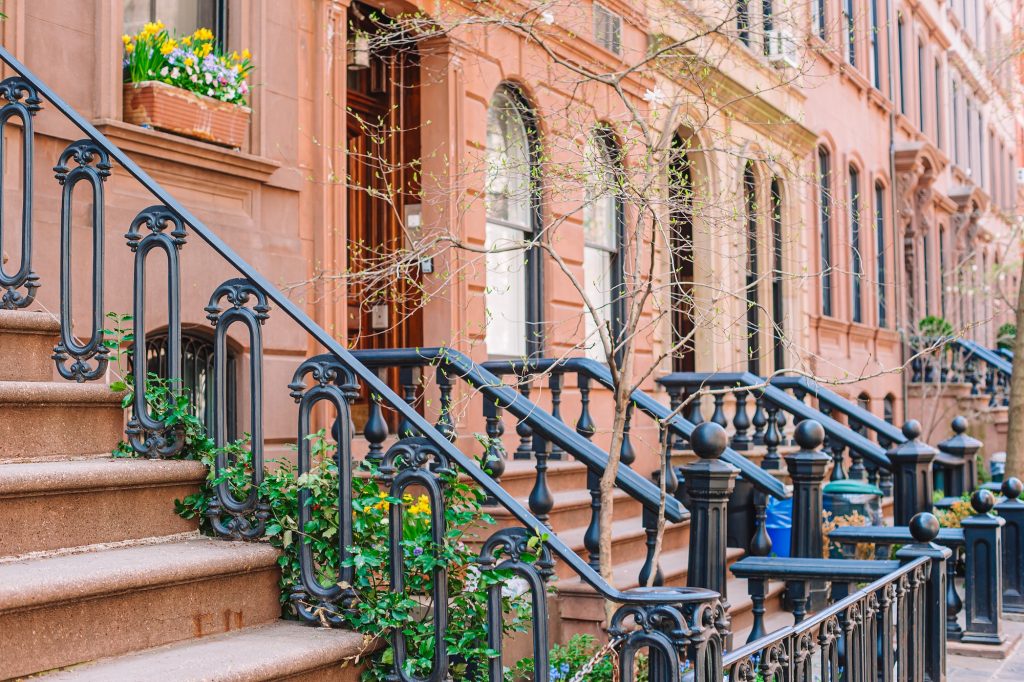
Live in an iconic NYC Brownstone? There’s a lot to love about these unique city houses. Many in the city are tourist attractions — like Carrie Bradshaw’s fictional residence, or the townhouse used in Breakfast at Tiffany’s.
However, because brownstones are often located in historical areas, the permitting process can be a bit challenging.
If you live in a brownstone and want to retain the character and charm but update it to your preferences, read on to learn more about the permitting process for these homes.
What Makes Brownstone Renovations Unique?
Brownstones are a distinctive style of home found in NYC, along with other cities in the Northeastern U.S. These homes were built throughout the late 1800s and early 1900s and are typically townhouses with multiple levels.
Renovating a brownstone is unique for a few reasons:
1. Many of the homes are in historic districts and subject to additional approvals via the Landmark Preservation Committee.
2. Brownstones are multi-level, but usually long and narrow. This can present a challenge for remodelers to make the best use of the existing footprint — there’s not a lot of room for expansion!
3. Brownstones tend to be older buildings, which can lead to unforeseen issues when renovating, like structural deterioration, loose mortar and joints, or years of unknown water intrusion.
4. Most brownstones are townhomes; some have been converted into multi-unit condos or co-ops. If you own a condo or a share in a co-op, your renovation will require additional approval from your board.
Do You Need a Permit to Remodel a NYC Brownstone?
New York City’s Department of Buildings (DOB) issues different types of permits for construction. Two common permit types are Alteration Type I (Alt Type-1) and Alteration Type II. (Alt Type-2).
Alteration Type I (Alt-1): This permit is required for major alterations that result in a new or amended Certificate of Occupancy (CofO). This includes projects that change the use, egress, or occupancy of the building, such as converting a single-family brownstone to a multi-family home. This type of permit is less typical for a residential renovation.
Alteration Type II (Alt-2): This permit is for standard interior renovations that do not change the use, egress, or occupancy of the building. This is the most common permit for a gut renovation that reconfigures the layout but doesn’t change the number of residential units.
Common Brownstone Renovation Projects That Require Permits
Most projects will require a permit. Anything that opens up walls, impacts structural systems, changes a layout, or alters plumbing or electrical systems will require a permit. The only projects that don’t require a permit are cosmetic updates, like painting or wallpapering, refinishing a floor, installing a cabinet, or replacing a fixture without making changes to wiring or piping. Common remodeling products that require a permit are:
Structural Changes and Layout Updates: Removing or adding load-bearing walls, changing the layout of rooms, or making an addition to the building will necessitate an Alt Type-2 permit in NYC.
Plumbing, Electrical, and HVAC Upgrades: Anything that alters mechanical, electrical, or plumbing systems will require an Alt Type-2 permit. This includes installing new plumbing or gas lines, rerouting pipes, adding electrical outlets, rewiring, or installing a new HVAC system.
Kitchens, Bathrooms, and Basement Work: Remodels that involve changing the location of fixtures, updating fixtures and plumbing or wiring, adding new bathrooms, or converting a basement into a habitable living space will all require Alt Type-2 permits.
Special Considerations for Landmark and Historic Districts
Many brownstones are located in historic districts. If yours is, or is an individually landmarked property, you’ll need additional approvals before you can start a remodel. The Landmark Preservation Committee (LPC) has a mission of preserving historic character and architecture of NYC buildings and neighborhoods.
For you, the homeowner, this means you must work within strict parameters for exterior changes. Any work done to the exterior, including windows, facades, stoops, and cornices, must be historically accurate, which may require special materials. While certain updates can be modernized, like windows, the profile and sightlines must be the same as the original windows.
On the inside, you won’t be subject to the same strict parameters unless any of your remodel plans will alter the facade, like adding a window or changing the location of an HVAC vent.
How Long Do Permits Take and What’s the Process?
In NYC, the permitting process is not exactly quick. A standard ALT Type-2 filing usually takes 1-2 months, without additional approvals from the LPC or a condo or co-op board. If you need LPC approval, you must get that first, and that process can take anywhere from a week to 3 months, depending on the planned scope of work.
Approvals from condo boards and co-ops will vary based on your specific residence, but can also take a few weeks to two months.
For an in-depth look at the permitting process, here are the steps:
Hire a Professional: You must hire a licensed Registered Architect (RA) or Professional Engineer (PE) to draw up the plans.
LPC Review (if applicable): If the brownstone is landmarked, your architect will first file the plans with the LPC for approval.
DOB Filing: Once LPC approval is secured (if needed), your architect or a permit expeditor will submit the plans to the DOB through their online portal.
Review and Revisions: The DOB reviews the plans for compliance with building codes. If there are any issues, the plans are sent back for revisions.
Permit Issuance: Once the DOB approves the plans, a contractor can apply for a work permit.
Board Submission, Review, and Approval: You must submit your renovation application with plans, permits, and contractor information for review. Then, you’ll usually be interviewed about your building plans before a decision is made.
Inspections: The DOB will conduct inspections throughout the project to ensure the work is being done according to the approved plans and building codes. Upon completion, a final inspection is performed to close out the permit.
Why Hire a Contractor for Your Brownstone Remodel
To get a permit, you must work with a licensed professional. To get the best results, choose a local pro with experience handling complex and historical brownstone remodeling projects. ‘
MTK is a premier remodeling and renovation contractor serving NYC. We have an in-house architect and a proven process for handling permit filings with NYC’s DOB to provide you with a streamlined and hassle-free experience.
Learn more about our services and get in touch for a free consultation.